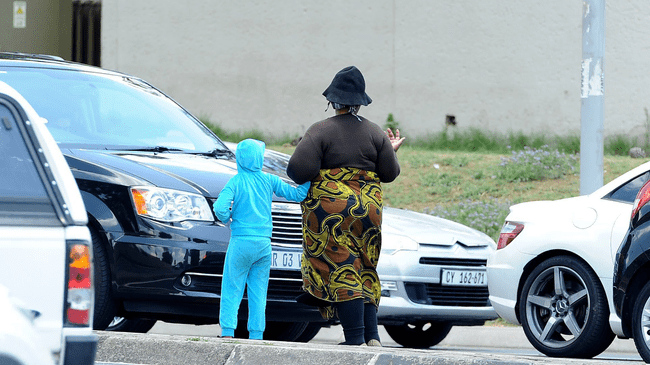
Extensive investigations have revealed the widespread exploitation of over 700 children in the province. Parents and guardians of these children have been renting out these children to the begging syndicates in the City.
This extensive child begging syndicate is believed to rake in R2 000 000.00 a month through the exploitation of these kids.
These young children, including newborn babies, form part of a larger organised group of gangs who deal in trafficking, drug abuse and sexual slavery.
It is believed that the children can make up to R100.00 a day on an average day, all of which is handed to the leaders of the gangs. On good days, the number could go from R150 to R250 a day. During the festive season and religious holidays, that could go as high as R700 a day.
How are children being recruited into these networks?
1. The children are scouted and identified based on their age and gender.
2. The traffickers negotiate the fees and terms with the parents, guardians and sometimes even with the children themselves.
3. They are then enlisted to work in certain areas and assigned gimmicks such has having an injury or disability.
4. They are believed to be required to hand over roughly 90% of their income for the day to the traffickers.
5. In many instances, they are introduced to drugs to keep them dependent on the traffickers or introduced into the sex trade.
The sad truth is, that once these children grow older and are considered to be of less value to the gang leaders, they are cast out, and have to fend for themselves on the streets.
When confronted with the truth, the eThekwini municipality said it was not aware of begging syndicates operating in the city and that under its by-laws, begging is illegal.
The question is, how could they not be aware? Unless you drive through the streets of Durban with your eyes closed, it is impossible to miss the swarm of children that roam the streets banging on car windows trying to get money from the passing motorists. This response from our Municipality is not good enough. Action and viable solutions are needed to save the youth of this City.
For direct answers to your specific personal questions, please contact us directly.
Author – Jessica Gooding